← Home · Roadway

Flexible Pavement Design for Southern Alberta Conditions

Together, we solve the challenges of tomorrow.

LEARN MORE →

The subgrade under a West Lethbridge arterial behaves quite differently from what you find near the river valley in North Lethbridge. One sits on glacial till with decent bearing, the other on alluvial silts that soften fast with moisture. That contrast alone explains why a standardized pavement section rarely works here. We design flexible pavement structures around actual subgrade modulus values and frost susceptibility data, not just traffic counts. For sites with marginal CBR below 3 percent, we often recommend a CBR road subgrade assessment before finalizing the structural number, and in industrial lots we cross-check with plate load testing to validate the modulus of the upper foundation layer.

In Lethbridge, the difference between a 12-year pavement and a 25-year pavement often comes down to how well you handled the silty clay layer at 600 mm depth.

Process and scope

Lethbridge grew outward from the coulees in distinct phases: the pre-war grid near downtown, the post-1960s expansion onto the prairie uplands, and the newer residential subdivisions pushing south and west. Each phase sits on slightly different surficial geology. The older core deals with lacustrine clays that heave during wet springs; the uplands encounter compact till with scattered boulders. A pavement design that ignores that history risks premature rutting and alligator cracking within three freeze-thaw cycles. We build the structural section using AASHTO 93 layer coefficients paired with Alberta Transportation's climate factors. When the formation level needs stabilization, we specify vibrocompaction for loose silty zones and verify compaction uniformity through sand cone density tests on the prepared subgrade.
Flexible Pavement Design for Southern Alberta Conditions
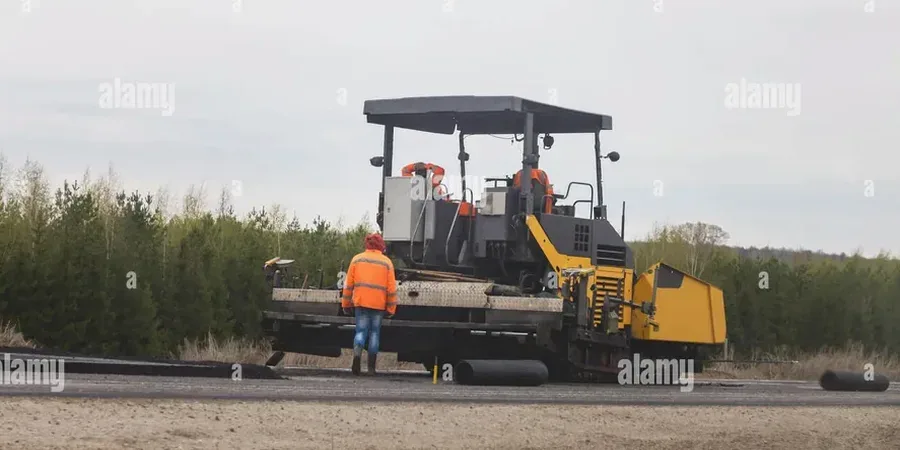
Technical reference image — Lethbridge

Local ground factors

At 910 meters above sea level on the high plains, Lethbridge takes the full force of Alberta's freeze-thaw cycles. The city records roughly 110 freeze-thaw events per year, each one capable of moving moisture through the pavement structure and into the subgrade. Silty soils, common across both the upland till and the river valley, are particularly frost-susceptible. A pavement designed without accounting for that local climate reality will show longitudinal cracking after the second winter. We factor in local groundwater data from the Oldman River basin and specify granular layers that cut the capillary rise before it reaches the asphalt-bound layers.

Need a geotechnical assessment?

Reply within 24h.

Email: info@geotechnicalengineering.xyz

Typical values

ParameterTypical value
Design traffic (ESALs, 20-year)0.5 – 15 million
Asphalt layer thickness75 – 200 mm
Granular base course100 – 250 mm (Crushed Gravel)
Granular sub-base150 – 450 mm
Target subgrade modulus≥ 40 MPa (post-compaction)
Frost protection depth1.2 – 1.8 m below grade
Design methodAASHTO 93 + Mechanistic-Empirical (MEPDG)

Complementary services

01

Mechanistic-Empirical Pavement Design

We model tensile strain at the bottom of the asphalt layer and compressive strain on top of the subgrade using local climate files for Lethbridge. Outputs include layer thicknesses, material specifications, and predicted IRI progression.

02

Subgrade Investigation and CBR Testing

Field CBR, DCP correlations, and lab Proctor tests on Shelby tube samples from the site. We map the subgrade modulus across the alignment so you can vary the structural section instead of over-excavating the whole footprint.

Relevant standards

AASHTO 93 Guide for Design of Pavement Structures, Alberta Transportation Pavement Design Manual, CSA A23.1 Concrete Materials and Methods (for stabilized base), ASTM D1883 Standard Test Method for California Bearing Ratio (CBR), ASTM D1557 Standard Test Methods for Laboratory Compaction Characteristics

Quick answers

How do you account for Lethbridge's freeze-thaw cycles in the flexible pavement design?

We use the 30-year climate data from the Lethbridge CDA station to set the frost penetration depth and number of freeze-thaw cycles. The granular base and sub-base thicknesses are specified to keep the frost line within non-susceptible material, preventing ice lens formation in the silty subgrade.

What is the typical structural number (SN) required for a collector road in Lethbridge?

For a residential collector with moderate truck traffic, the required SN usually falls between 3.5 and 4.5 depending on the subgrade CBR. We calculate the exact number from the 20-year ESAL projection and the resilient modulus of the native soil, then back-calculate layer thicknesses.

Can you design a flexible pavement for an industrial yard with heavy forklift traffic?

Yes. Industrial pavements differ from highways because of slow-moving, channelized loads. We switch to a Westergaard-based analysis for the bound layers and specify a high-stability asphalt mix paired with a cement-stabilized base to resist rutting under sustained loads.

What does flexible pavement design cost for a project in Lethbridge?

Design fees for a standard commercial or subdivision road in Lethbridge typically range from CA$2,080 to CA$6,520 depending on the length of the alignment, number of soil investigation points, and whether City of Lethbridge approval drawings are needed.

Do you handle the City of Lethbridge development permit submission for the pavement design?

We prepare the sealed engineering drawings and pavement design report that meet the City of Lethbridge Transportation Engineering standards. The permit package includes cross-sections, layer specifications, subgrade preparation notes, and the structural calculation summary.
Location and service area

We serve projects in Lethbridge and surrounding areas.

View larger map