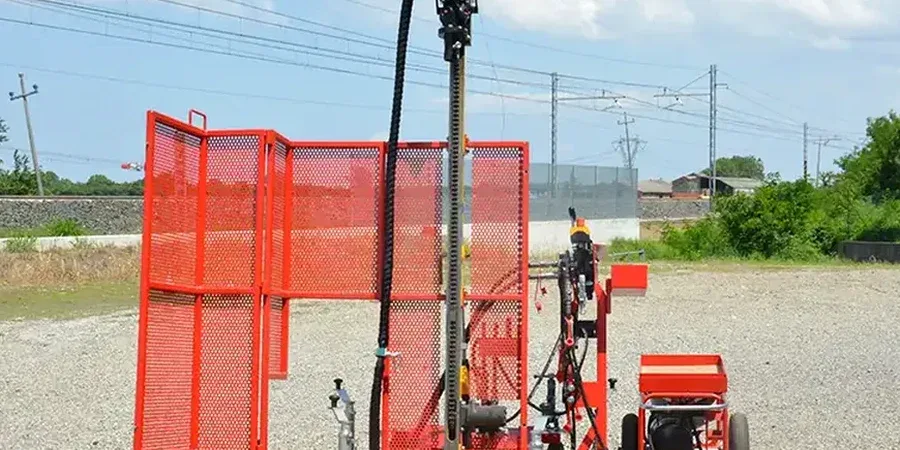
Lethbridge's growth along the Oldman River valley has shaped a city with dramatic topography and equally dramatic soil transitions. From the historic brick plants of the early 1900s to today's expanding subdivisions west of University Drive, every project here sits on glacial till, clays, or sands that demand careful investigation. The Standard Penetration Test remains the most practical way to get reliable soil data fast. Our team runs SPT rigs across Lethbridge daily. We understand how the local geology affects your foundation costs and schedule. Getting accurate N-values early prevents expensive surprises during excavation, especially where the Bearpaw Formation creates unexpected soft zones. This is not generic testing. It is site-specific data collection backed by CSA A23.3 and NBCC requirements, delivered with the speed that Lethbridge contractors expect.
A 30-centimeter SPT sample often reveals more about foundation risk than a week of desktop analysis.
Local ground factors
Lethbridge sits at 910 meters above sea level on a high prairie plateau, but that elevation belies the instability below ground. The 2013 flood event along the Oldman River triggered slope failures in several coulee-side neighborhoods, exposing how quickly saturated silts lose strength. Skipping an SPT investigation on parcels near these slopes is a financial risk most developers here have learned the hard way. We have seen foundations under-designed for the actual N-value profile, leading to excessive settlement and costly underpinning. The city's clay-rich till can also mask sand lenses that collapse during drilling. Without blow count verification at depth, you are relying on assumptions that no geotechnical engineer in southern Alberta would sign off on. Our reports flag these hazards explicitly, giving you the data to make informed decisions before the concrete is poured.
Quick answers
How much does an SPT test cost in Lethbridge?
For a single borehole with SPT sampling at standard intervals, rates range from CA$680 to CA$1,060 depending on depth, access conditions, and whether you need rush reporting. Sites on the west side with easy truck access tend toward the lower end. A full investigation with multiple boreholes and lab testing is quoted per project after a site walk.
How many boreholes do I need for a typical building lot in Lethbridge?
The National Building Code generally calls for at least one borehole per 200 square meters for simple sites, but Lethbridge's variable geology often demands two or three. We space them to capture transitions between the glacial till uplands and any coulee-adjacent deposits. A site-specific layout prevents missing a soft pocket that could skew the entire foundation design.
What N-value indicates good bearing soil in southern Alberta?
For spread footings on the local till, corrected N60 values above 15 to 20 typically correspond to allowable bearing pressures in the 150 to 200 kPa range. Values below 8 in saturated silts near the Oldman River terraces warrant deeper investigation or ground improvement. Every site is different. We interpret the numbers against the CFEM correlations and the specific load requirements of your structure.
How soon can I get the SPT log after drilling?
Field logs with raw blow counts and soil descriptions are ready same-day. The corrected N60 report with stratigraphic profile and preliminary recommendations ships within 48 hours for standard commercial projects. Rush turnaround is available if your concrete pour is scheduled.