← Home · Ground improvement

Vibrocompaction Design for Lethbridge Soils

Together, we solve the challenges of tomorrow.

LEARN MORE →

Driving from the coulee-adjacent neighborhoods of Riverstone to the flatter industrial parks in Sherring reveals a sharp contrast in ground conditions across Lethbridge. The Oldman River valley carved through glacial till and alluvial sands, leaving some sites with dense gravel and others with loose, water-laid silts. For a city of over 100,000 that sits at 910 meters elevation where chinook winds can strip moisture from exposed soil in hours, a standard compaction spec often falls short. We apply vibrocompaction design that accounts for these localized grain-size shifts. A quick grain-size analysis run on borehole samples tells us whether the deposit will respond to vibratory densification, while CPT testing along the proposed grid refines the target depth and probe spacing before any rig moves in.

In the mixed glacial deposits of Lethbridge, vibrocompaction design succeeds or fails on the accuracy of the grain-size curve—treat the silt fraction wrong and you densify nothing.

Process and scope

A common mistake we see on Lethbridge jobs is treating all west-side deposits as uniform outwash. Crews probe, hit refusal on a gravel lens at 4 meters, and assume the whole profile is dense. Then a silty pocket collapses months later under foundation load. Our vibrocompaction design sequence starts with a rigorous review of depositional history—glaciofluvial, glaciolacustrine, and post-glacial aeolian units each densify differently under vibration. We specify vibrator frequency, amperage draw, and step interval based on the fines content from Atterberg limits testing. When silt content exceeds 12 percent, we often supplement with bottom-feed stone to maintain pore pressure dissipation. The goal is a measurable relative density above 70 percent, not just a rig that ran its cycle.
Vibrocompaction Design for Lethbridge Soils
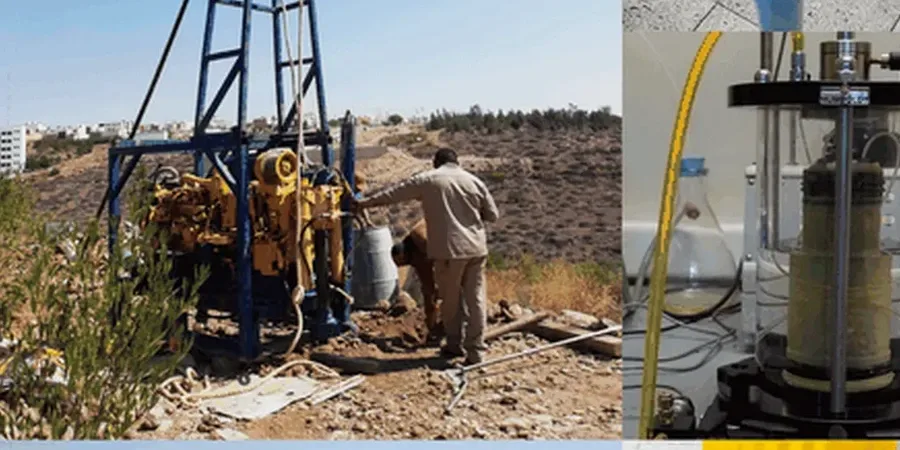
Technical reference image — Lethbridge

Local ground factors

The semi-arid climate of southern Alberta produces a water table that can swing over two meters between a dry August and a snowmelt-heavy April. In Lethbridge, a vibrocompaction design calibrated to saturated sand in spring may underperform when the same deposit drains to residual moisture by fall. We factor this seasonal fluctuation into the pore pressure dissipation model. Another local risk is the presence of thin, discontinuous bentonitic clay seams within the till—these can clog the vibrator tip and prevent energy transfer to the surrounding granular matrix. Our field supervisors log every probe refusal and adjust the depth profile on the spot. Without that vigilance, a single untreated seam can create a differential settlement plane under a continuous footing, leading to cracking in the superstructure within the first two freeze-thaw cycles.

Need a geotechnical assessment?

Reply within 24h.

Email: info@geotechnicalengineering.xyz

Typical values

ParameterTypical value
Applicable soil typesGranular soils with ≤12% fines (SP, SW, GP, GW per ASTM D2488)
Typical treatment depth6 to 28 m below grade, depending on groundwater and stratigraphy
Probe spacing (grid)1.5 to 3.5 m triangular pattern, refined by CPT before and after
Target relative density≥70% Dr (often specified to 75% for seismic-prone zones)
Vibrator power range130–180 kW electric or hydraulic, selected per D50 of stratum
Post-treatment verificationCPT, SPT, or PMT at 5% of improvement points per NBCC
Reference standardCSA A23.3 for concrete bearing after improvement; ASTM D6066 for SPT energy

Complementary services

01

Feasibility and grid design

We review existing geotechnical data, run supplementary grain-size curves, and define probe spacing, energy input, and treatment depth. The deliverable includes a stamped design report with acceptance criteria aligned to NBCC and project structural loads.

02

Field QA/QC and post-treatment verification

Our engineers oversee the vibrocompaction rig during production, monitor real-time compaction data, and direct the verification program—CPT soundings, SPT borings, or pressuremeter tests at specified grid locations—to confirm relative density targets are met before foundation construction proceeds.

Relevant standards

NBCC 2020 Division B Part 4 for foundation design and seismic hazard, CSA A23.3:19 Design of Concrete Structures (bearing on improved ground), ASTM D6066 Standard Practice for Determining the Normalized Penetration Resistance of Sands, ASTM D2488 Description and Identification of Soils (Visual-Manual Procedure), Alberta Building Code (ABC) 2023, referencing NBCC with provincial amendments

Quick answers

What does vibrocompaction design cost in Lethbridge?

For a typical commercial or light industrial site in Lethbridge, vibrocompaction design and field verification run between CA$2,300 and CA$7,030, depending on treatment area, depth, and the number of post-treatment CPT soundings required.

How deep can vibrocompaction treat the loose sands along the Oldman River?

In the alluvial deposits near the Oldman River, we routinely treat to 20 meters with standard electric vibrators. Deeper profiles—up to 28 meters—are feasible with hydraulic rigs and bottom-feed stone, depending on groundwater conditions and cobble content encountered during probing.

Does vibrocompaction work in silty soils found on Lethbridge's west side?

Vibrocompaction is most effective when fines content stays below 12 percent. Many west-side deposits contain glaciolacustrine silts exceeding this threshold. In those cases we assess the grain-size curve carefully—if silt is too high, we recommend stone columns or a combined solution rather than pure vibratory densification.

What verification testing is required after vibrocompaction in Lethbridge?

Per NBCC and our standard specification, we perform CPT or SPT verification at a minimum of 5 percent of improvement points, distributed across the treated grid. For critical structures, we add pressuremeter testing at selected locations to confirm deformation modulus meets the design assumptions before footing construction begins.
Location and service area

We serve projects in Lethbridge and surrounding areas.

View larger map