← Home · Foundations

Shallow Foundation Design in Lethbridge: Geotechnical Solutions for Local Conditions

Together, we solve the challenges of tomorrow.

LEARN MORE →

Lethbridge’s development from a coal mining settlement along the Oldman River valley into a major southern Alberta city has left a distinct geological fingerprint on its building landscape. The river has carved deep coulees through Cretaceous bedrock, leaving behind complex terrace deposits of silty clay, sand, and gravel lenses that vary dramatically within short horizontal distances. An engineer sizing footings for a new commercial building near the downtown core or a residential subdivision on the west side encounters these alluvial variations head-on. The stiff Bearpaw Shale bedrock may sit near the surface in some areas, while in others compressible clay layers exceeding 15 meters demand careful bearing capacity calculations. Our shallow foundation design work accounts for this stratigraphic unpredictability through targeted test pit investigations that expose the soil profile directly, combined with laboratory strength testing to validate design assumptions before a single cubic meter of concrete is poured.

In Lethbridge's coulee terrain, the differential settlement between footings on stiff till and those on alluvial clay governs the design, not just the ultimate bearing pressure.

Process and scope

A detail that local earthwork contractors learn quickly is how the semi-arid climate of Lethbridge, with annual precipitation barely reaching 380 mm, creates desiccated crust layers in the upper clay that mislead simple bearing evaluations. The top meter of stiff, fractured clay can mask softer, normally consolidated material below, a condition that becomes critical when designing strip footings for light industrial buildings. Our methodology integrates systematic sampling at depth with Atterberg limits testing to establish the plasticity index and assess shrink-swell potential in the regional glacial lake clays. We also correlate in-situ density measurements with consolidation test data to refine settlement predictions. Lethbridge’s frost penetration depth, established at 1.5 meters by local bylaw referencing the Alberta Building Code, governs minimum footing embedment across the city. For lightly loaded structures, this frost protection requirement often dictates the foundation geometry more than the ultimate bearing capacity, and our designs balance both constraints without over-excavating.
Shallow Foundation Design in Lethbridge: Geotechnical Solutions for Local Conditions
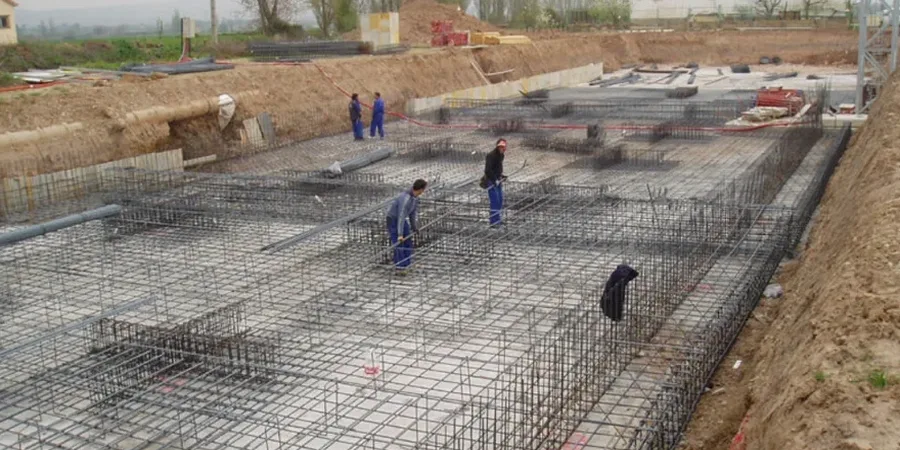
Technical reference image — Lethbridge

Local ground factors

The contrast between Lethbridge's dry upland benches and the irrigated river valley creates a distinct risk profile for shallow foundations. In neighborhoods like Riverstone or areas near the coulee edges, seasonal moisture fluctuations in the clay subgrade trigger volumetric changes that exceed the serviceability limits of stiffened slabs. An older bungalow on a simple strip footing might show negligible distress, while a new two-story infill with a larger footprint can experience noticeable arching cracks within three wet-dry cycles if the geotechnical report did not recommend deepened perimeter beams. The presence of sporadic sand lenses within the glacial till introduces another variable: localized drainage paths that concentrate water around footing excavations. We mitigate these scenarios by specifying compacted granular fill layers beneath the footing bearing elevation and, where clay plasticity exceeds 25%, by adjusting the reinforcement detailing per CSA A23.3 to control crack widths in the foundation concrete.

Need a geotechnical assessment?

Reply within 24h.

Email: info@geotechnicalengineering.xyz

Typical values

ParameterTypical value
Minimum footing embedment depth (frost protection)1.5 m per Alberta Building Code
Typical allowable bearing pressure (undisturbed till)150–200 kPa
Typical allowable bearing pressure (alluvial clay)75–125 kPa
Settlement analysis methodSchmertmann (sand) or consolidation theory (clay)
Factor of safety (bearing capacity)3.0 (per NBCC 2015)
Standard footing width range (residential)450–900 mm
Reference for expansive soil classificationCSA A23.3:14 for concrete exposure conditions

Complementary services

01

Bearing Capacity and Settlement Analysis

We calculate net allowable bearing pressures using limit equilibrium methods (Terzaghi, Meyerhof, Vesić) and estimate settlements under service loads. For compressible clay layers common in Lethbridge's east-side developments, we run one-dimensional consolidation settlement predictions and compare them against the NBCC serviceability criteria.

02

Footing and Raft Foundation Design

We size individual spread footings, strip footings, and mat foundations for residential and commercial structures. Designs account for Lethbridge's 1.5 m frost depth, the aggressive sulfate exposure class (S-1 to S-3) typical of local soils, and the eccentricity limits from wind loading under the open prairie conditions.

03

Expansive Soil Mitigation Strategies

For sites underlain by high-plasticity glacial lake clays, we recommend deepened perimeter beams, moisture barrier systems, or removal and replacement with engineered granular fill. Our specifications reference the CFEM guidelines for swelling soil design and include construction-phase inspection protocols to verify compaction and fill placement.

Relevant standards

NBCC 2015 (National Building Code of Canada): structural design provisions and frost depth requirements, CSA A23.3:14: design of concrete structures for exposure to sulfate soils common in southern Alberta, Canadian Foundation Engineering Manual (CFEM, 4th ed.) – bearing capacity and settlement calculation methods, ASTM D2487: Unified Soil Classification System for describing Lethbridge's variable till and alluvial deposits, ASTM D4318: Atterberg limits testing for expansive clay identification

Quick answers

What is the standard frost depth for shallow foundations in Lethbridge?

The City of Lethbridge, following the Alberta Building Code and NBCC 2015, requires a minimum footing embedment depth of 1.5 meters below finished grade to protect against frost heave. In exposed locations on the coulee benches, this depth is non-negotiable for heated structures. For unheated outbuildings, the required depth may increase by 30% depending on the site's snow cover exposure classification.

How much does a shallow foundation design cost for a typical Lethbridge residential project?

A complete shallow foundation design package for a single-family home on a standard city lot typically ranges from CA$2,610 to CA$4,470. The final fee depends on the number of boreholes or test pits required, the complexity of the soil profile encountered, and whether supplementary laboratory testing such as consolidation or Atterberg limits is needed to support the design calculations.

Do I need a geotechnical investigation before building footings in Lethbridge?

Yes. The City of Lethbridge building permit process requires a geotechnical report for most new construction. The Oldman River valley geology is too variable to rely on prescriptive bearing values from the building code alone. A site-specific investigation identifies the depth to competent bearing stratum, the presence of compressible clay layers, and the sulfate exposure class, all of which directly influence footing dimensions and concrete mix specifications.

How do you address the risk of differential settlement in Lethbridge's coulee slopes?

Near coulee edges, the soil profile often transitions from stiff glacial till to weaker shale bedrock or alluvial infill over short distances. We address this by running differential settlement analyses between adjacent footings and, where the predicted angular distortion exceeds 1/500 for load-bearing walls, we either deepen the footings to a uniform bearing stratum or switch to a stiffened raft foundation design. The CFEM provides the calculation framework we apply.
Location and service area

We serve projects in Lethbridge and surrounding areas.

View larger map